
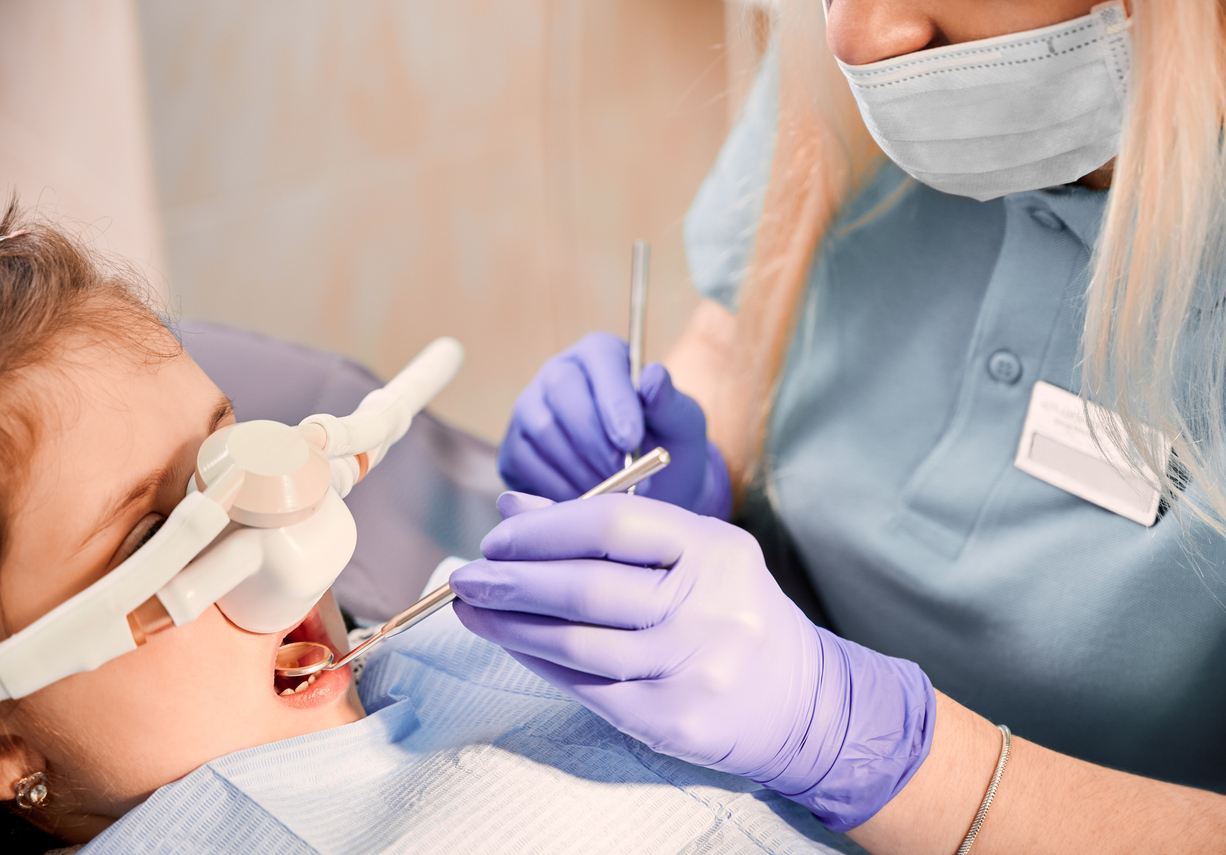
| Quick Answer: Sedation dentistry can be considered safe for toddlers when it is performed in the right setting by properly trained professionals. The American Academy of Pediatric Dentistry supports sedation for very young children who need extensive dental work and can’t safely cooperate in the chair. The key safety factors are the depth of sedation used, the training of the team, continuous monitoring, and appropriate pre-procedure fasting. |
If your pediatric dentist has recommended sedation for your 2, 3, or 4-year-old, the fear you’re feeling is completely reasonable. Handing over responsibility for your toddler’s safety — even for a routine procedure — is one of the harder things parents face. At Children’s Dentistry and Orthodontics, we hear this question every week, and the short answer is: yes, dentistry can be performed safely for toddlers when appropriate precautions, monitoring, and trained providers are involved.
This guide walks through what sedation means for toddlers specifically, when it’s actually needed, what safety standards we follow at our Las Vegas offices, and the questions every parent should ask before saying yes.
What Is Sedation Dentistry for Toddlers?
Sedation dentistry is the use of medication to help a child stay calm, still, and comfortable during dental treatment. For toddlers, sedation isn’t used for routine cleanings — it’s reserved for situations where a child genuinely can’t cooperate safely for the treatment they need. That can mean multiple cavities that need filling, a dental injury, or extensive work that would otherwise require many separate visits.
Sedation falls on a spectrum from very light (laughing gas, still fully awake) to deep (unconscious or nearly so). The AAPD and American Academy of Pediatrics have published joint guidelines on pediatric sedation safety, and those guidelines are what reputable pediatric dental practices follow — including ours.
Is Sedation Safe for a 2-Year-Old?
In the right setting, yes. But toddlers require more careful assessment than older children. The AAPD specifically notes that patients younger than 2 years of age have decreased functional residual capacity — meaning less oxygen reserve in their lungs — and smaller airways that make them more vulnerable during sedation. That’s not a reason to avoid sedation when it’s genuinely needed. It’s a reason to make sure the right team is involved.
For toddlers under age 3, the AAPD recommends considering whether a dedicated anesthesia-trained provider should be present, particularly for deeper sedation. At our Las Vegas practice, deeper sedation for very young children is always overseen by an anesthesia-trained provider — never the dentist alone.
What Types of Sedation Are Used for Toddlers?
There are several levels of sedation used in pediatric dentistry, and the right one depends on your toddler’s age, anxiety level, health history, and what treatment is needed.
| Sedation Type | How It’s Given | Depth | Typical Use for Toddlers |
|---|---|---|---|
| Nitrous Oxide (laughing gas) | Inhaled through nose mask | Minimal — fully awake | Mild anxiety, short procedures |
| Oral Sedation | Liquid medication by mouth | Moderate — drowsy but responsive | Moderate anxiety, single-visit treatment |
| General Anesthesia | Hospital or surgery center | Deep — unconscious | Very young, extensive decay, medical complexity |
For toddlers, the decision usually comes down to how much work is needed and how the child is likely to cope. Our sedation dentistry team will walk you through the options based on your child’s specific situation.
When Do Toddlers Actually Need Sedation?
Sedation isn’t a default. Most routine dental care for toddlers — exams, cleanings, fluoride applications, even many fillings — can be done without it. Sedation is recommended when one of the following is true:
- Your toddler needs extensive treatment that would take multiple visits otherwise
- Your child has severe dental anxiety or has had a traumatic prior experience
- Your child has special healthcare needs that make cooperation difficult
- Your child is very young and can’t safely hold still for the necessary care
- Your child has had trauma — a knocked-out tooth or facial injury — that needs immediate repair
For children with behavioral challenges or special healthcare needs, our special needs dentistry program provides dedicated, sensitive care with sedation options built around each child’s individual situation.
What Safety Standards Should I Look For?
This is where parents can have real agency. Sedation is safe because of what surrounds the medication, not just the medication itself. Here are the specific questions worth asking:
- Who administers the sedation? For deeper levels of sedation in very young children, many practices involve a dedicated anesthesia-trained provider whose sole responsibility is monitoring sedation and airway safety.
- Is the dental team PALS certified? Pediatric Advanced Life Support certification is a baseline expectation.
- What monitoring is used? At minimum, continuous pulse oximetry (oxygen), heart rate, and blood pressure. For moderate or deeper sedation, end-tidal CO2 (capnography) is the current standard.
- What are the fasting instructions? Reputable practices will send home specific NPO (nothing by mouth) guidelines based on the type of sedation planned. Fasting reduces the risk of aspiration.
- What happens if something goes wrong? Ask about the office’s emergency protocols and whether they’ve rehearsed them.
If a practice can’t answer these questions clearly, that’s your signal to keep looking.
How to Prepare Your Toddler for a Sedation Visit in Las Vegas
If you’ve decided sedation is the right path, preparation matters. At our Las Vegas offices, we’ll send home specific pre-appointment instructions covering:
- Fasting guidelines — individualized to the type of sedation planned for your child
- Medication disclosure — a list of anything your child currently takes, including over-the-counter and supplements
- What to wear — comfortable, loose clothing that allows monitor placement
- Recovery planning — one adult focused on your child, a second ideally present to drive
- Post-procedure expectations — drowsiness for several hours is normal; no school or daycare that day
Families across the Las Vegas, North Las Vegas, Anthem, and Pahrump areas trust our team for toddler sedation care, and we accept Medicaid plus most insurance plans — so cost doesn’t have to be a barrier to getting your child the treatment they need.
Please note: Children’s Dentistry & Orthodontics does not provide IV sedation.
|
Questions about whether sedation is right for your toddler? We truly care about your child’s health and happiness. Reach out to get your child’s appointment scheduled. We can’t wait to see you. Children’s Dentistry and Orthodontics │ Greater Las Vegas, NV │ Book Now → |